Tracking Tonnage As A Simple Programming Guide
A simple “north star” for barbell training when you’re tired of program-hopping...
4 min read
Tonnage > Templates
A simple “north star” for barbell training when you’re tired of program-hopping
People love chasing the perfect program.
The perfect spreadsheet. The perfect split. The perfect rep scheme. The perfect “template” that will finally make everything click.
But most lifters don’t need a perfect template. They need one thing: a simple way to know they’re doing enough, consistently, and progressing over time.
That’s where tonnage comes in.
What is tonnage (and why it matters)?
Tonnage is just:
sets × reps × weight
Add that up for a lift (or a whole session), and you get a number that tells you how much work you actually did.
It’s not flashy. It’s not “optimal.” It’s just truth.
Because tonnage answers the question that templates often dodge:
“Am I doing enough hard work, week after week, to keep getting stronger?”
The anti-program program
Here’s a dead-simple heuristic that works for real life:
- Train the big four lifts at least once a week
(squat, bench, deadlift, overhead press — combine days however you like). - Track your weekly tonnage for those lifts.
- Slowly increase it over time.
That’s it.
No need to obsess over whether you’re doing 3x5, 5x5, 6x4, or “wave-loading blocks” you saw on YouTube. If you’re consistently moving meaningful tonnage in the main lifts each week, you’re doing the thing that actually drives long-term strength.
Tonnage is your “north star”
For most lifters—especially when you’re living in that classic hypertrophy/strength-building range (roughly 3–10 reps)—tonnage is a ridiculously useful guide.
Why?
Because your week-to-week progress often won’t look like PRs.
You might not hit lifetime bests for months. Sometimes years. And that’s normal.
But you can keep winning by stacking up consistent training stress:
- same lifts
- decent effort
- slightly more total work over time
In other words: tonnage keeps you progressing even when the mirror, the mood, and the bar speed are being dramatic.
Strength maintenance is boring (and that’s the point)
Here’s a comforting truth:
If you keep your weekly tonnage moving on the big lifts, you’ll maintain strength remarkably well—even through busy seasons, imperfect sleep, and the occasional “I only had 45 minutes.”
You don’t need novelty. You need continuity.
And tonnage is continuity you can measure.
“But I get bored of 3x5…”
Cool. Change it.
If you’re doing 3x5 and you hate it this month, swap to:
- 5x3
- triples across
- a top set + back-off sets
- anything sensible in that 3–10 rep world
The key isn’t the combo. The key is the output:
Try to match last week’s session tonnage (or slightly exceed it).
That’s the anti-program program: freedom inside a simple constraint.
The one big exception: peaking for a 1RM
If you’re competing in powerlifting—or chasing a true lifetime 1RM—then yes, you’ll eventually need a peak.
Peaking usually means:
- reps come down week by week
- tonnage comes down
- intensity goes up
- you practice heavy singles and doubles
- you test a big single at the end
That’s normal and useful for that specific goal.
But it’s also worth saying out loud:
Testing 1RMs carries higher injury risk than building strength through repeated submaximal work.
For many lifters, the safer long-term path looks like:
- solid sets of 3–5 reps
- consistent weekly tonnage
- slow, boring, reliable progress
Not glamorous. Very effective. Very repeatable.
Progress without perfection
Here’s the mindset shift:
You don’t need to feel like you’re “crushing it” every session.
You just need to keep showing up and moving tonnage.
You might never post the lift on Instagram.
But your joints will thank you.
Your future self will thank you.
And your strength will quietly keep building.
If you can track it, you can grow it
This is the whole reason I’ve built Strength Journeys around tonnage.
- Every lift has a progress guide with a session tonnage chart and a 30-day average baked in. Not just the big four: front squats, rows, cleans and the rest of the lift explorer all get one.
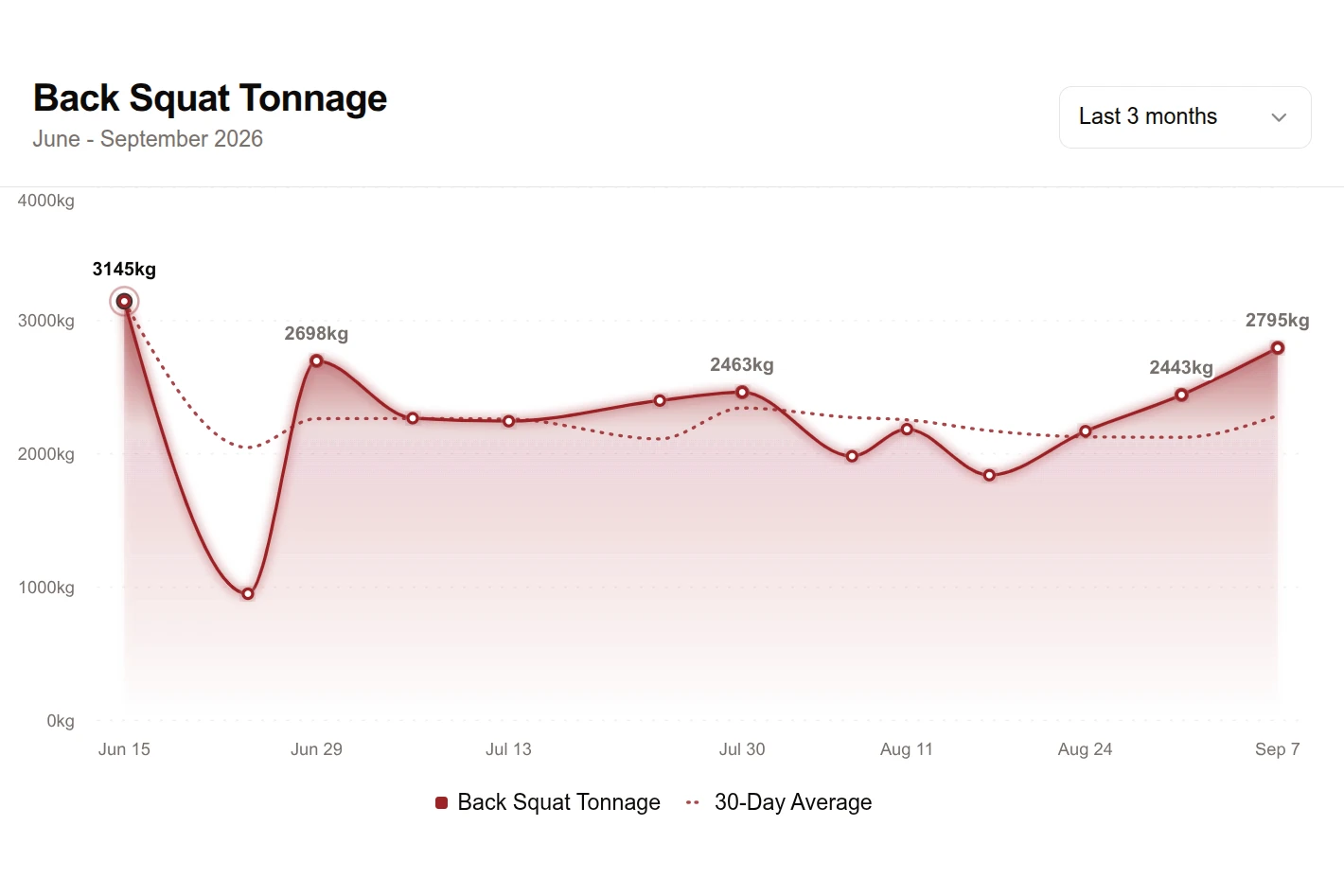
- There’s an overall tonnage metrics page to see the big picture.
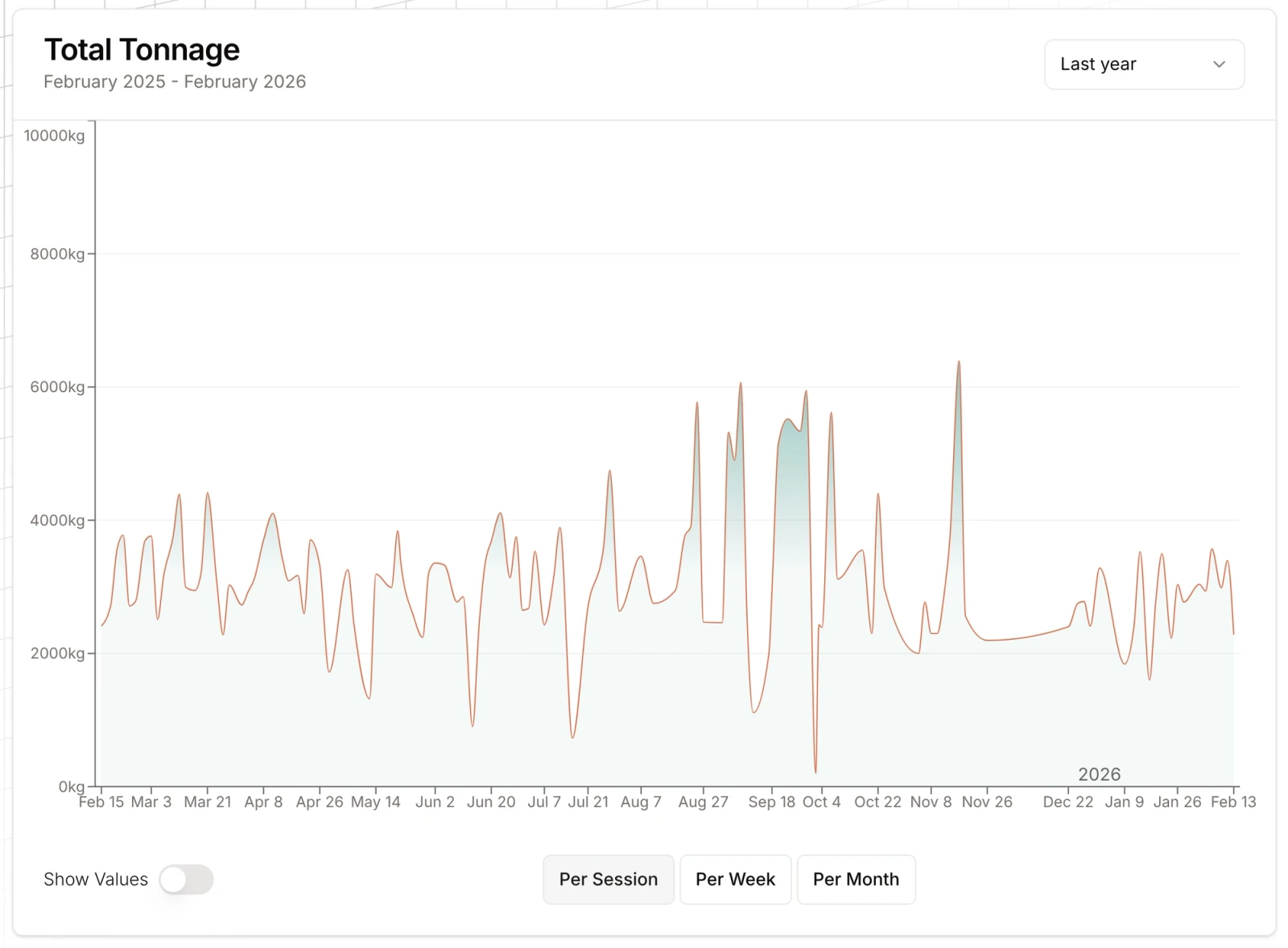
This is a good way to track overall wear and tear to your body.
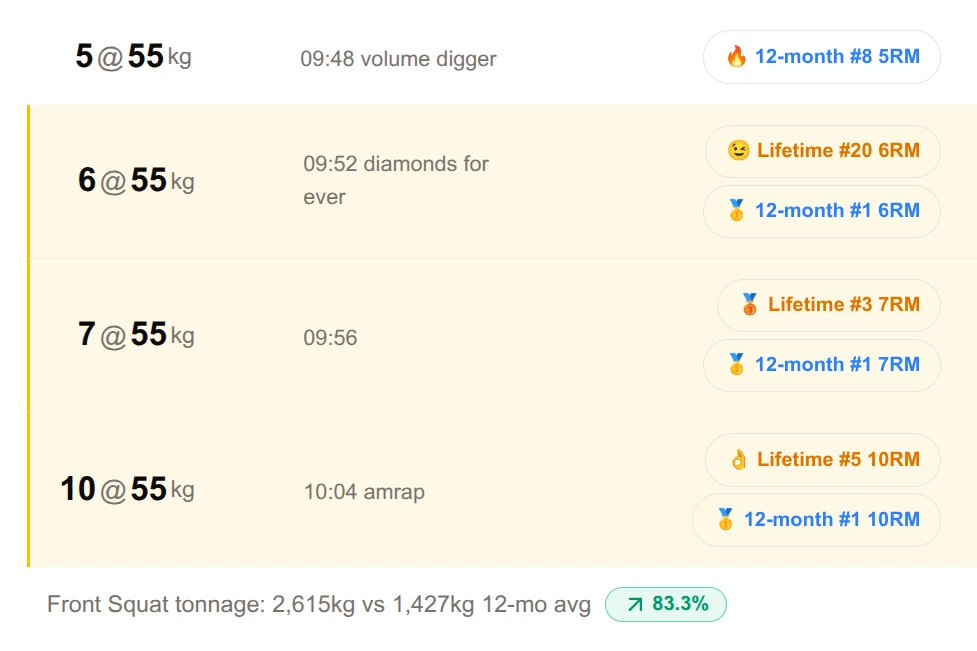
- And the workout log shows your tonnage mid-session. Every lift you log is compared with your 12-month average for that lift, so you know whether one more set is worth it before you rack the bar.
Keep score month to month
Weekly tonnage is great. Monthly tonnage is where the story shows up.
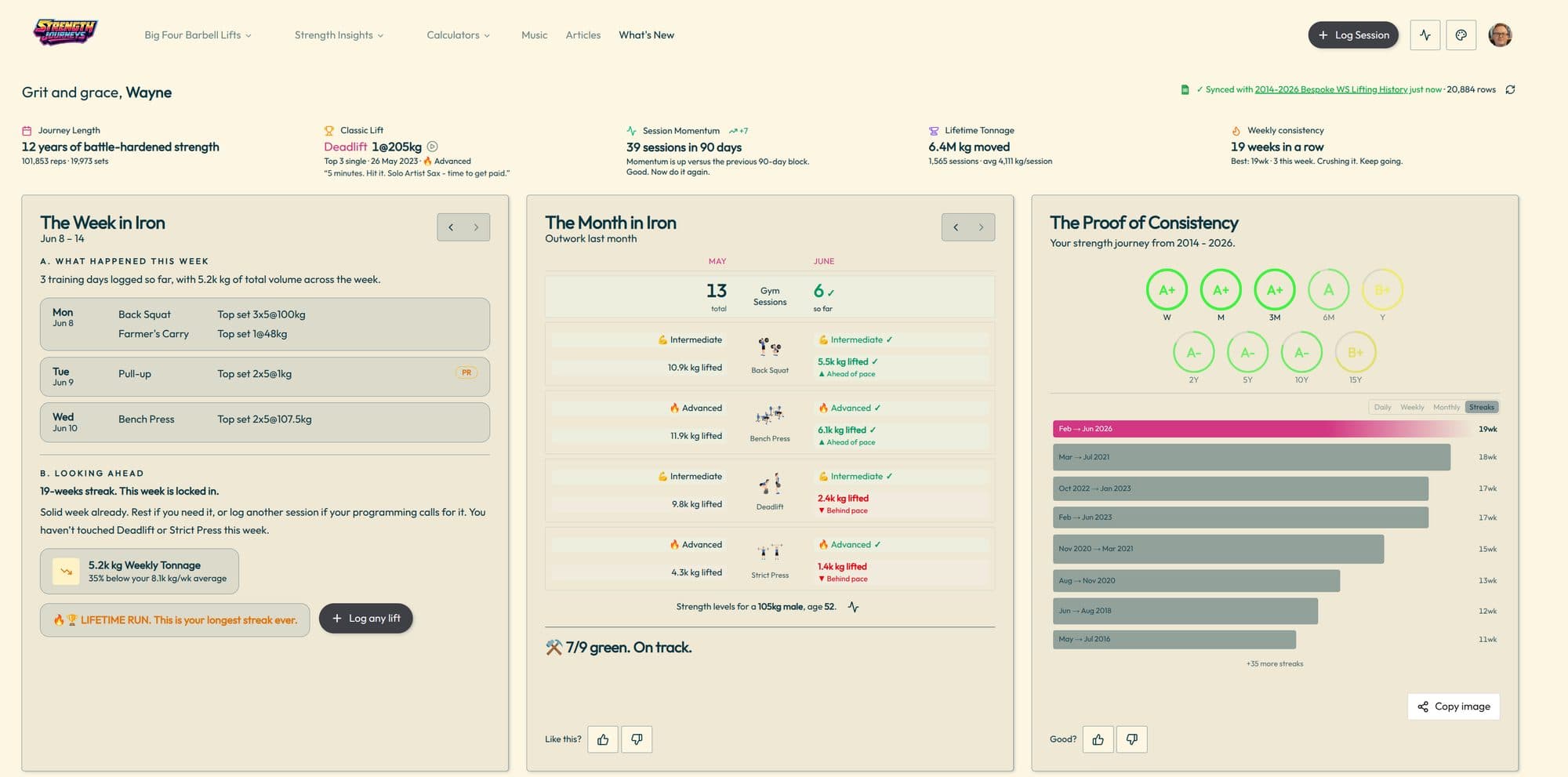
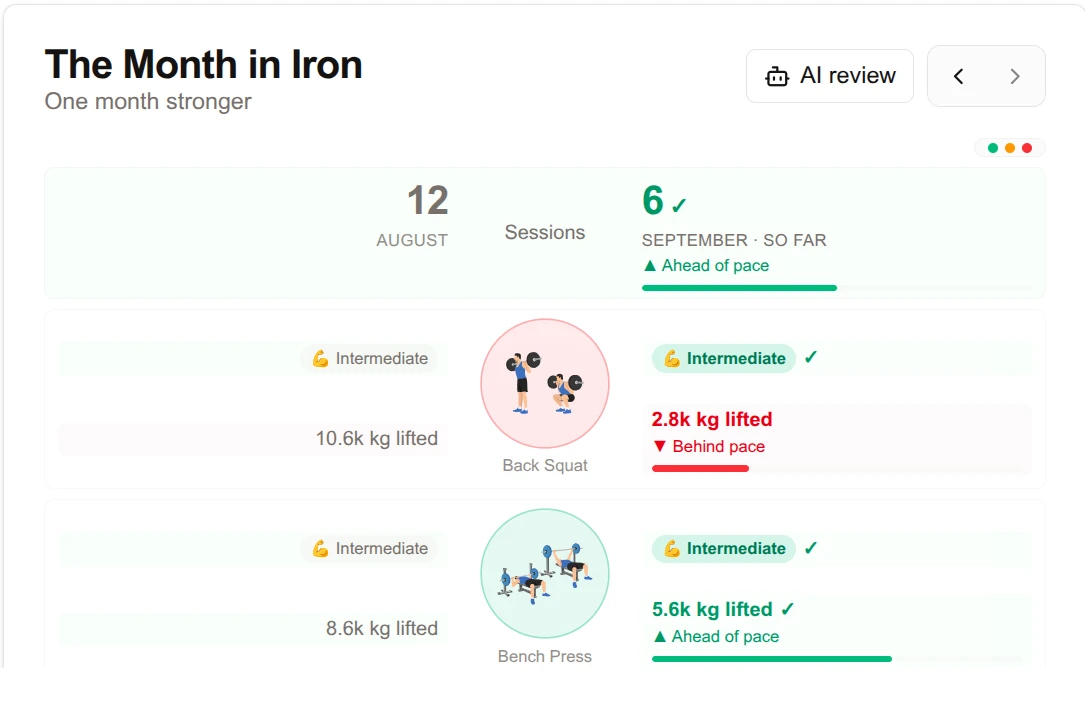
The home dashboard has a card called The Month in Iron. It lines up this month against last month for each of the big four: sessions, tonnage lifted, and strength level.
Partway through the month it tells you which lifts are ahead of pace. If your squat is lagging in week two, you still have plenty of month left to catch it up.
Because when you can see the work, you can stop guessing.
And when you stop guessing, you can stop program-hopping.
You lift. You track. You nudge the number upward.
Over months, that turns into strength.
The takeaway
If you’re overwhelmed by programs, splits, and templates, try this:
Make tonnage your north star.
Hit the main lifts weekly.
Keep the effort honest.
Let the tonnage rise—slowly, consistently, sustainably.
Templates come and go.
Tonnage tells the truth.