Barbell Back Squat Strength Guide & Progress Tracker

Check back squat strength standards, explore squat progress charts, compare rep PRs, and dive into back squat videos, FAQs, and related articles.

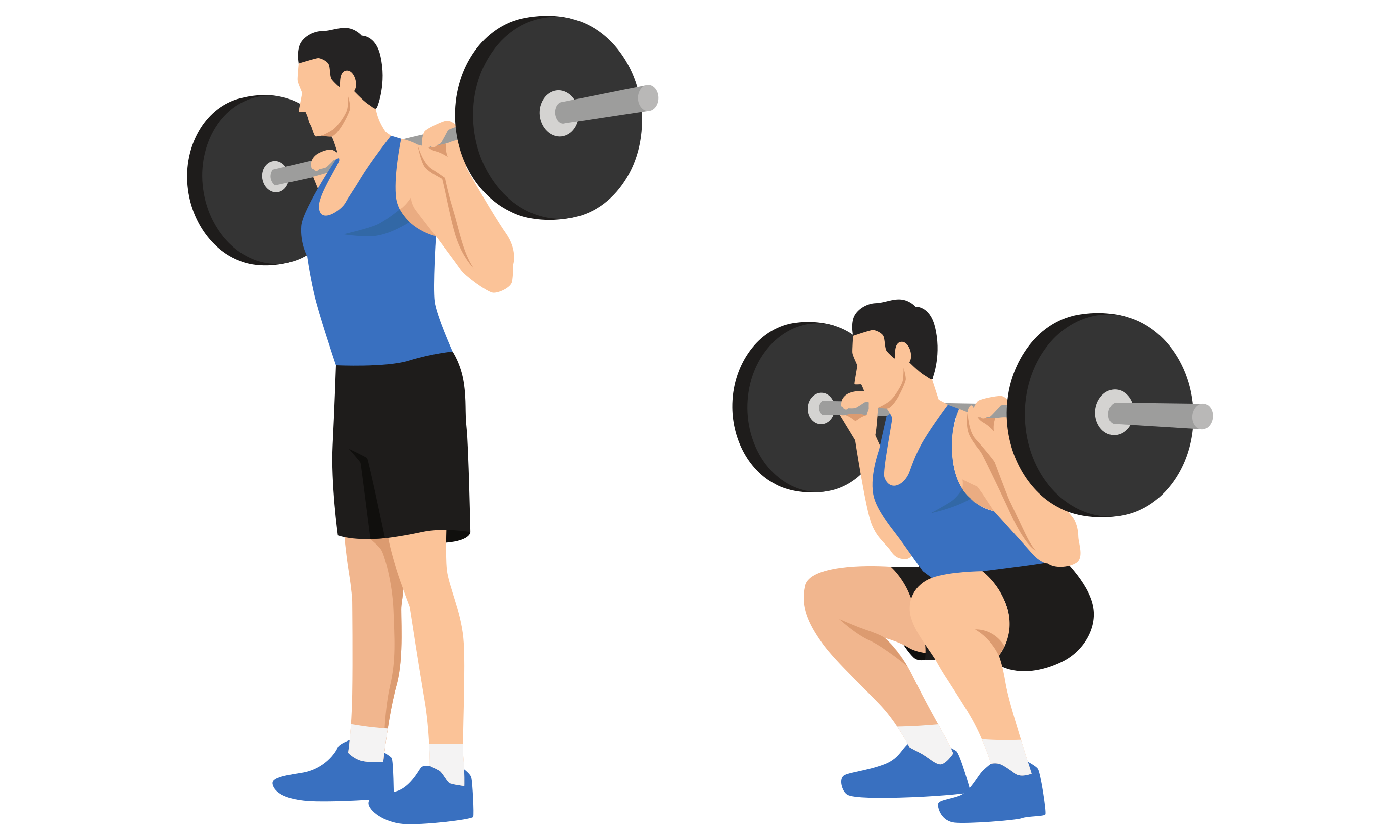
Back Squat Diagram

Back Squat Strength Standards

Strength levels for a 200lb male, age 30 · enter your details.

Back Squat Strength Levels →

Back Squat Video Guides

How Strong Should My Back Squat Be?

The barbell squat is one of the most effective exercises for building strength and muscle mass. The amount of weight you should be able to squat depends on your body weight, fitness level, and experience with the exercise.

Suppose you have mastered the air squat (for a set of 10-20) and can squat the barbell with decent form. Now, progressively add small amounts of weight until you get strong. Stick with three sets of 5 reps for as long as you can.

As a general guideline, a beginner should be able to squat their body weight. An intermediate strength milestone will be a squat 1.5 times their body weight. An advanced lifter should be able to squat 1.75 to 2 times their body weight.

Logged-in users can look below for their Back Squat history chart, which is visually mapped against both bodyweight multiples and the strength level standards for their bodyweight, age, and sex.

Third Party Back Squat Articles

Why the back squat became the King of Lifts

There is simply no other exercise, and certainly no machine, that produces the level of central nervous system activity, improved balance and coordination, skeletal loading and bone density enhancement, muscular stimulation and growth, connective tissue stress and strength, psychological demand and toughness, and overall systemic conditioning than the correctly performed full squat.

Mark Rippetoe, Starting Strength

My Back Squat Journey

Most recent session

No Back Squat sessions logged yet.

Back Squat Estimated One Rep Maxes
Useful chart?
E1RM Algorithm
Back Squat Tonnage
Useful chart?
Back Squat Strength Potential By Rep Range
No data yet
Back Squat Singles, Triples and Fives
New!
Useful chart?

Back Squat FAQ

What is a good squat weight for my bodyweight?

A common benchmark is squatting your own bodyweight for a single rep as a beginner milestone. An intermediate male lifter (around 185 lb bodyweight) should aim for 225–275 lbs. Advanced lifters typically squat 1.5–2× their bodyweight, meaning 275–370 lbs at 185 lb bodyweight. Elite-level squats exceed 2× bodyweight. Women's standards are proportionally similar relative to bodyweight. Use the strength standards slider above to see exact targets for your age, sex, and bodyweight.
Is squatting 225 lbs good?

Yes — a 225 lb squat is a solid milestone. For a 185 lb male lifter, squatting 225 lbs (roughly 1.2× bodyweight) puts you solidly in the intermediate range. For a lighter lifter or a woman, 225 lbs represents advanced or elite territory. Two plates per side is a meaningful gym milestone that most casual lifters never reach.

Is squatting 315 lbs good?

A 315 lb squat (three plates per side) is a strong advanced milestone. For an average-sized male lifter around 185 lb, squatting 315 lbs represents roughly 1.7× bodyweight — solidly in the advanced category. Most serious recreational lifters who train consistently for a few years can aim for 315. It is considered elite for female lifters.

Is a 150 kg (330 lb) squat good?

A 150 kg squat is an excellent lift. At 330 lbs, this puts most male lifters of average bodyweight in the advanced-to-elite category. For a 185 lb (84 kg) male, 150 kg is roughly 1.75× bodyweight — a strong advanced number. For lighter lifters this is elite territory. Hitting 150 kg consistently with good depth is a real achievement.

What squat weight should a beginner aim for?

A brand-new male lifter with no training history should realistically expect to reach a 135 lb (one plate per side) squat within their first few months of consistent training. A reasonable first-year goal is reaching your own bodyweight for a set of five reps. Women typically target 65–95 lbs in the beginner phase. The most important thing early on is consistent training and good technique — strength follows.

What is a good squat-to-bodyweight ratio?

As a rough guide: squatting 1× your bodyweight is a beginner-to-intermediate milestone, 1.5× is solidly intermediate-to-advanced, and 2× bodyweight or more is advanced-to-elite. A 185 lb lifter squatting 185 lbs (1×), 275 lbs (1.5×), or 370 lbs (2×) illustrates these tiers. Note these are 1RM estimates — working sets at these percentages are more common in training.

How often should I test my squat max?

Most coaches recommend testing your true 1RM no more than every 8–16 weeks, typically at the end of a training cycle. Frequent true max attempts are taxing on the joints and CNS and increase injury risk. Instead, use E1RM estimates from your working sets to track progress between true max tests — this is exactly what the calculator on this page does.

How do I calculate my squat one rep max from reps?

Use a 1RM formula like Brzycki or Epley on any working set of 1–10 reps. For example, if you squat 225 lbs for 5 reps, the Brzycki formula estimates your 1RM at around 253 lbs. The squat 1RM calculator linked on this page runs all 7 major formulas side by side so you can see the full range. Sets of 3–6 reps tend to give the most accurate estimates.