Squat Strength Levels
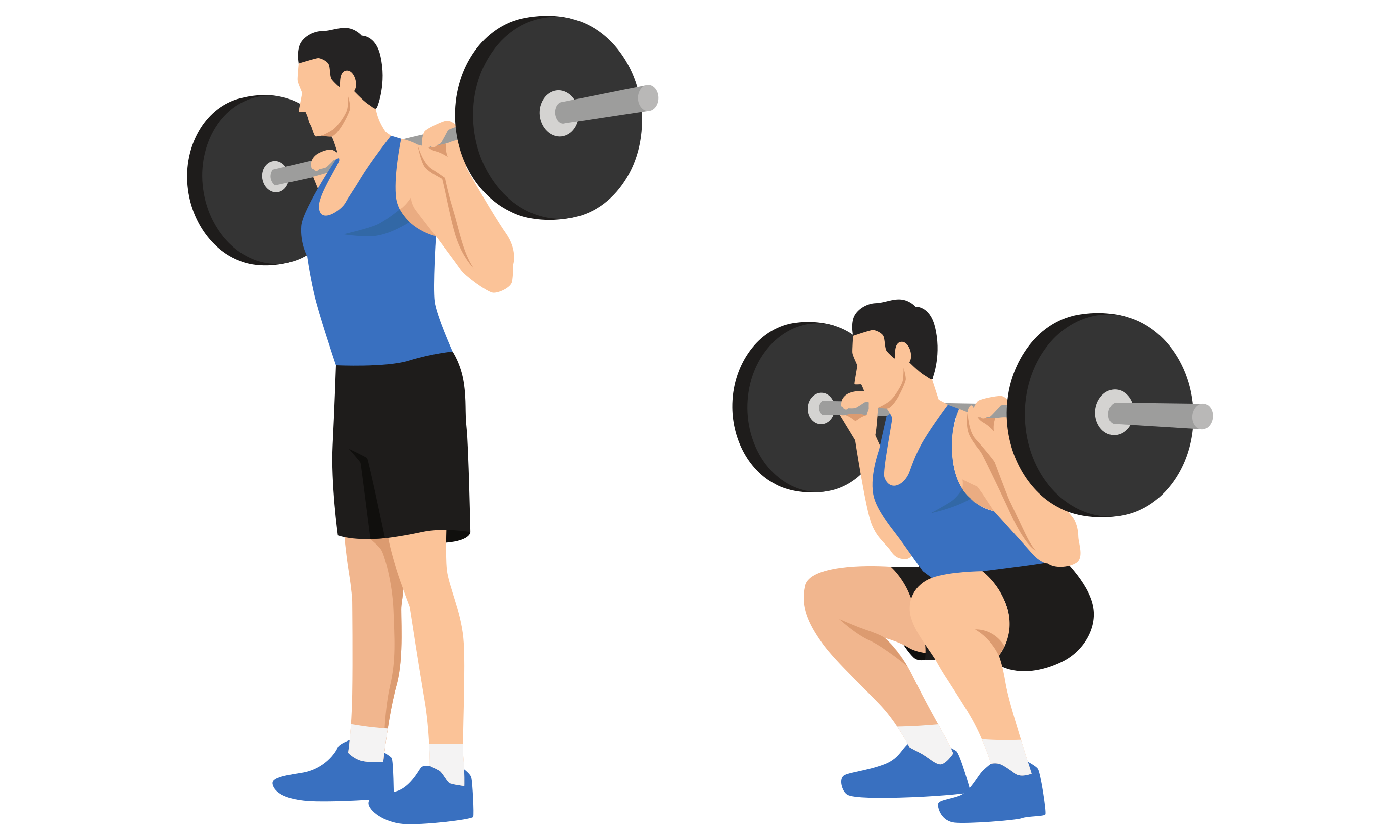
Use these squat strength standards to benchmark your back squat against lifters of similar size. The standards below adapt to your athlete profile instead of assuming a one-size-fits-all number.
Squat standards are useful for setting realistic goals. They tell you whether your current max is physically active, beginner, intermediate, advanced, or elite, and help you decide what milestone should come next.
Set your real details so the standards reflect your profile instead of the default starting values.
See Your Actual Lifts Ranked
Sign in to create your free lifting log. Track your real lifts over time and see how your strength level stacks up against these standards.
What Counts As A Good Squat For Your Bodyweight?
A good squat depends on context. Absolute load matters, but bodyweight, sex, and age change what that load actually means.
That is why squat strength standards by bodyweight are more useful than one viral benchmark. A 225 squat might be an early milestone for one person, a strong intermediate result for another, and still a stepping stone for a heavier, more experienced lifter.
Milestones Worth Chasing
- Around bodyweight is an early milestone for many lifters.
- Around 1.5 times bodyweight is often where a squat starts to look properly strong.
- Around 2 times bodyweight usually pushes into advanced territory for many men.
| Bodyweight | Active | Beginner | Inter. | Advanced | Elite |
|---|---|---|---|---|---|
| 150 lb/ 68 kg | 100 lb / 46 kg | 170 lb / 78 kg | 230 lb / 104 kg | 315 lb / 143 kg | 415 lb / 189 kg |
| 175 lb/ 79 kg | 110 lb / 51 kg | 190 lb / 87 kg | 255 lb / 116 kg | 355 lb / 160 kg | 465 lb / 210 kg |
| 200 lb/ 91 kg | 130 lb / 58 kg | 215 lb / 98 kg | 285 lb / 130 kg | 395 lb / 179 kg | 520 lb / 236 kg |
| 225 lb/ 102 kg | 125 lb / 57 kg | 215 lb / 98 kg | 290 lb / 131 kg | 395 lb / 180 kg | 510 lb / 232 kg |
Squat standards for males aged 20–29. Values in lb / kg. Use the interactive tool above for personalised results by age, sex, and bodyweight.
 Plate Milestones