All lifts

Barbell Row Guide & Progress Tracker

Learn the barbell row: torso angle, grip and bar path in plain English, a coaching video, answers to common questions, and free barbell row progress tracking with rep PRs and tonnage.

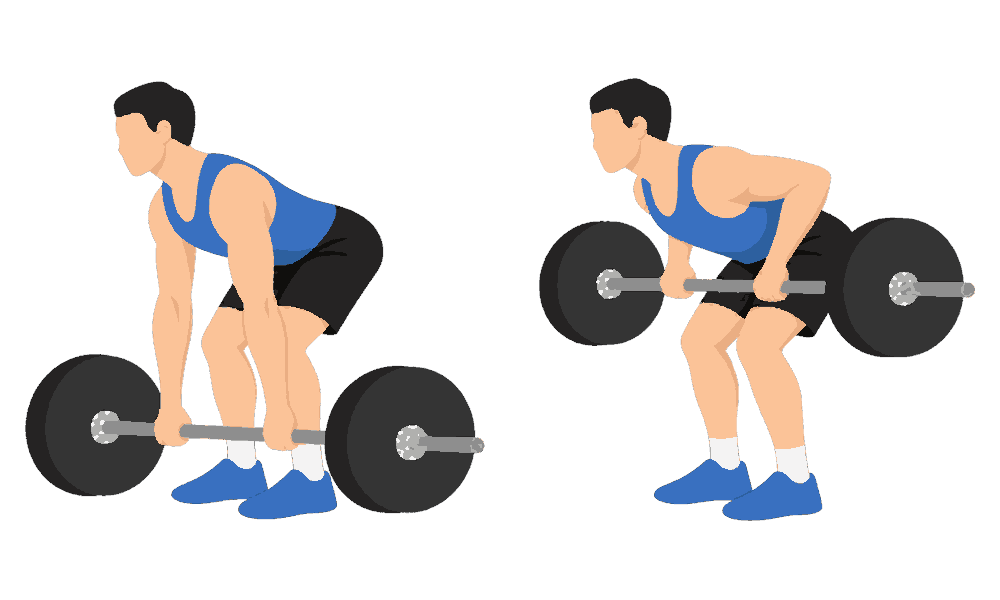
Barbell Row Diagram

Barbell Row technique

Hold the bar at arm's length, lean forward from the hips with a flat back, then pull the bar up to your stomach and lower it again.
  1. 1Set the back tight before the first rep and hold the torso angle steady.
  2. 2Pull the bar into the lower chest or upper stomach without jerking the hips.
  3. 3Lower the bar under control and re-brace before the next rep.

Barbell Row Video Guide

Gym Shorts (How To): The Barbell Row · Barbell Logic

What the Barbell Row Builds

The barbell row has you hinge forward with a flat back and pull the bar from arm's length to your lower chest or upper stomach. It builds the lats, upper back and rear shoulders, and it strengthens the same back position you hold in every deadlift.

A strong row balances the pressing in a typical program. It supports healthy shoulders, gives your bench press a stable base to push from, and helps you keep the bar close on heavy pulls.

Hold your torso angle steady and let your arms and back do the work. Sets of 5 to 10 reps suit most goals, and a little body movement on the heaviest sets is fine as long as the bar path stays smooth.

Log your rows and this page tracks your rep PRs, tonnage and progress, so you can watch your pulling keep pace with your pressing.

Third Party Barbell Row Articles

Why every program needs a row

The barbell row should find its way into every barbell-based training program at some point.

Barbell Logic, The Barbell Row: A Complete Guide

What is a good barbell row weight?

As a rough rule of thumb, a strong barbell row often lands around 80 percent of your bench press for a clean set. Rowing your own bodyweight for reps is a satisfying milestone. Keep an eye on your bench press to see how the two grow together.

What is the difference between a barbell row and a Pendlay row?

A Pendlay row returns the bar to the floor every rep with the torso close to parallel, so each rep starts from a dead stop. A standard barbell row keeps the bar hanging between reps, usually with the torso a little more upright.

Should I use an overhand or underhand grip for barbell rows?

Both work. An overhand grip emphasises the upper back, while an underhand grip brings in more biceps and usually lets you lift a little more. Choose one as your main row and log it consistently so your progress is easy to compare.

Where should the bar touch when I row?

Aim for your lower chest or upper stomach, depending on your arm length and torso angle. The bar should travel in a fairly straight line up from the middle of your foot.

How do I keep my lower back strong while rowing?

Brace before the first rep, keep your back flat, and hold the same torso angle through the set. If your hips start swinging to move the weight, take a little off and keep the reps controlled.

How often should I train barbell rows?

Once or twice a week works well for most lifters, often on the same days as bench press or overhead pressing.